SANDWICHES • 5 min read
The Long Roll
Six regional names for one format — and two very different breads on this menu alone.
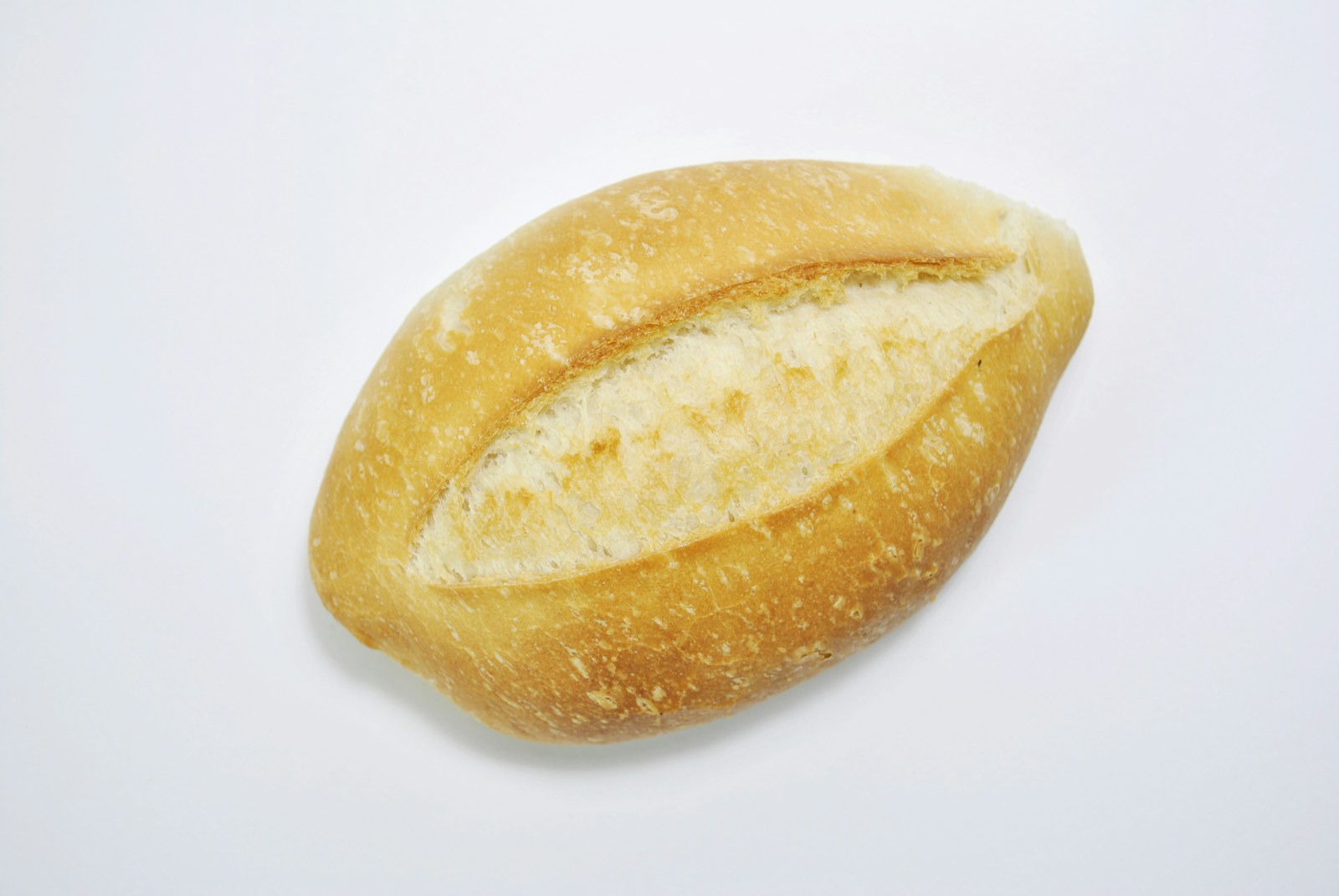
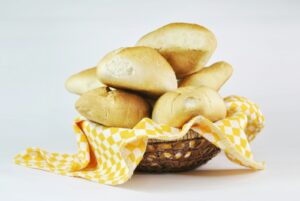
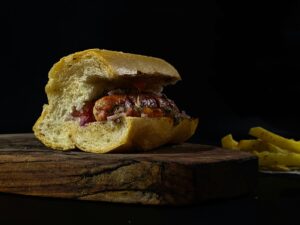
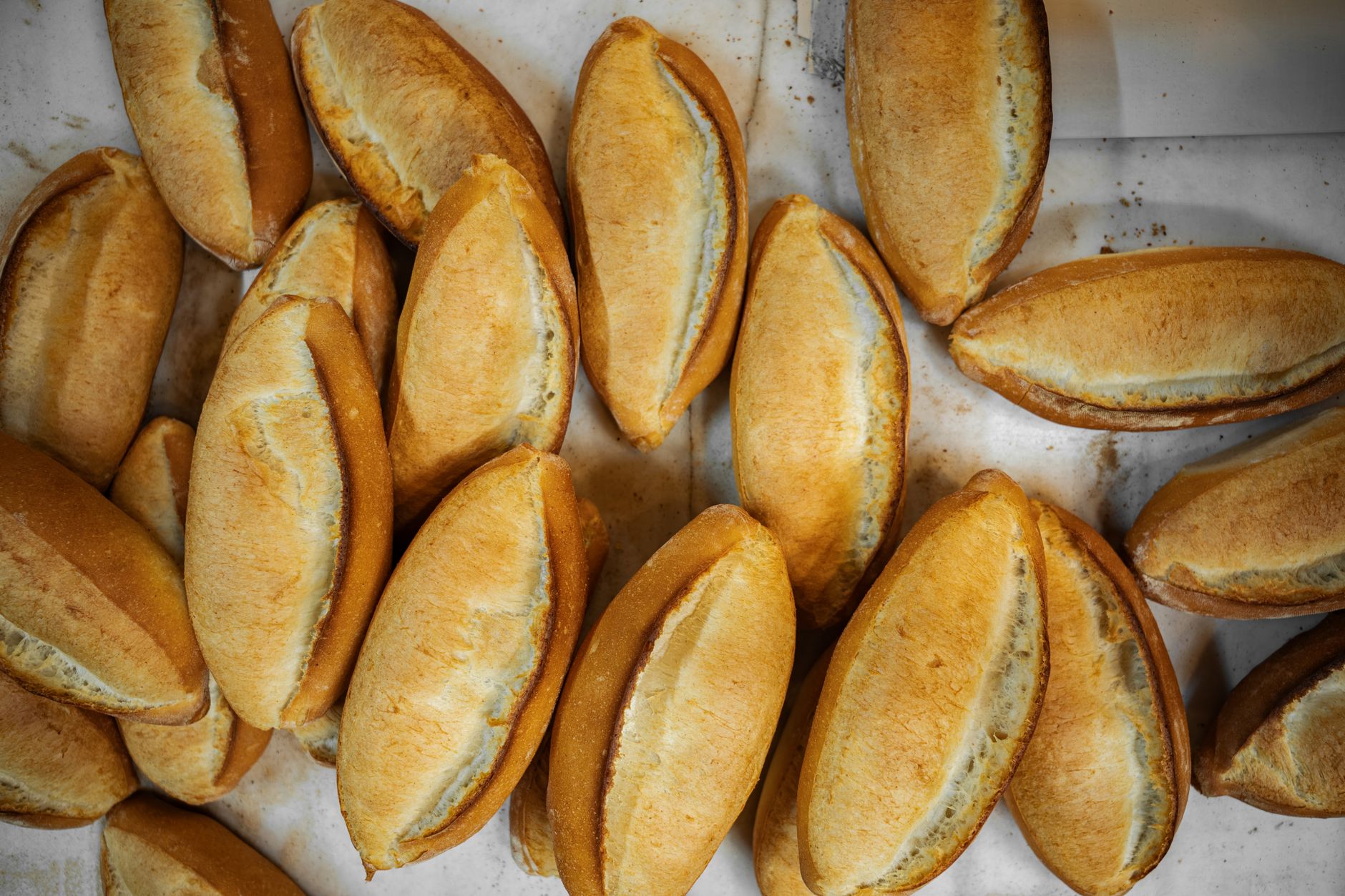
Hoagie, sub, grinder, hero, po’boy and wedge are largely regional names for a filled long roll. The real differences are the bread and what comes on it as standard. This menu runs two breads: a soft Amoroso roll for hot fillings and brittle New Orleans French bread for fried ones.
Look down this menu and something becomes obvious: a great many of the things on it are served in a long roll. Nine Phillys, nine po’boys, five wraps in their own way. That is not a coincidence of this restaurant — it reflects something real about American sandwiches.
Almost every American city that developed its own sandwich developed it in a long roll, and each one gave it a different name.
The same sandwich, six names
| Name | Where | Typically |
|---|---|---|
| Hoagie | Philadelphia | Italian meats, cheese, oil and vinegar |
| Sub | Much of the country | A catch-all term |
| Grinder | New England | Often hot and toasted |
| Hero | New York | Italian-American fillings |
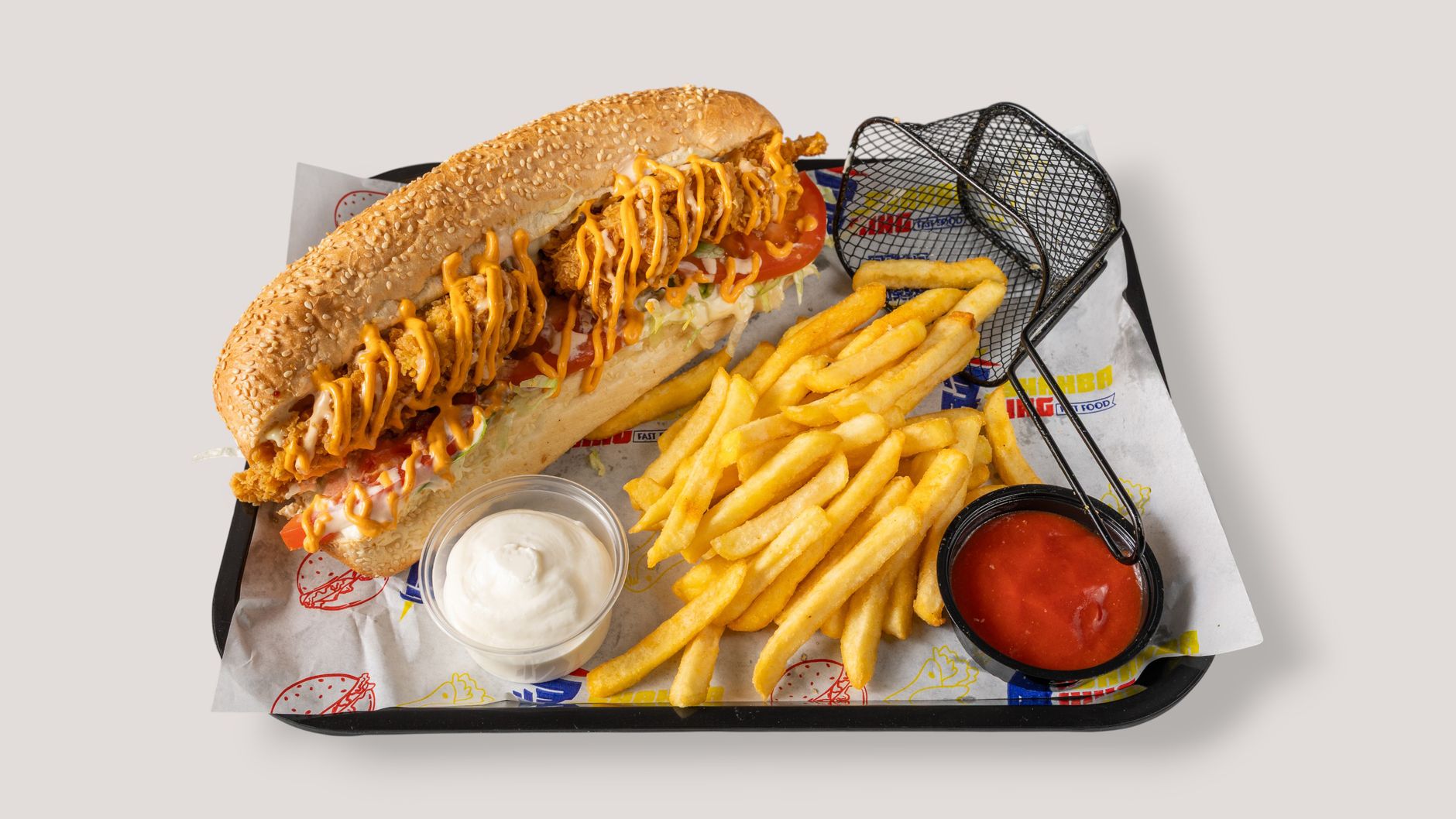
| Po’boy | New Orleans | Fried seafood, on local French bread |
| Wedge | Parts of New York state | The same thing again |
Six names, broadly one idea. What differs is the bread, the convention for what goes on as standard, and whether it is served hot or cold — and those differences are what make a po’boy genuinely distinct from a hoagie rather than just differently labelled.
Why a long roll at all
Three practical reasons, none of them about flavour.
It carries more filling per unit of bread than a round loaf, because the surface you are filling runs the whole length. It is portable and eats in one hand, which matters for food sold to people working. And it divides cleanly — a long roll cut in half is two portions, where a round sandwich cut in half is two awkward halves.
Bread shaped this way is ancient, but the filled long roll as a meal is largely an industrial-era American idea, tied to feeding workers cheaply and fast. The po’boy name itself comes from that world.
The two rolls on this menu
We use two, and the difference between them is the clearest illustration of why the bread is not incidental.
| Amoroso roll | New Orleans French bread | |
|---|---|---|
| Crust | Thin and soft | Thin and brittle — it shatters |
| Interior | Soft, fairly close | Very light, almost airy |
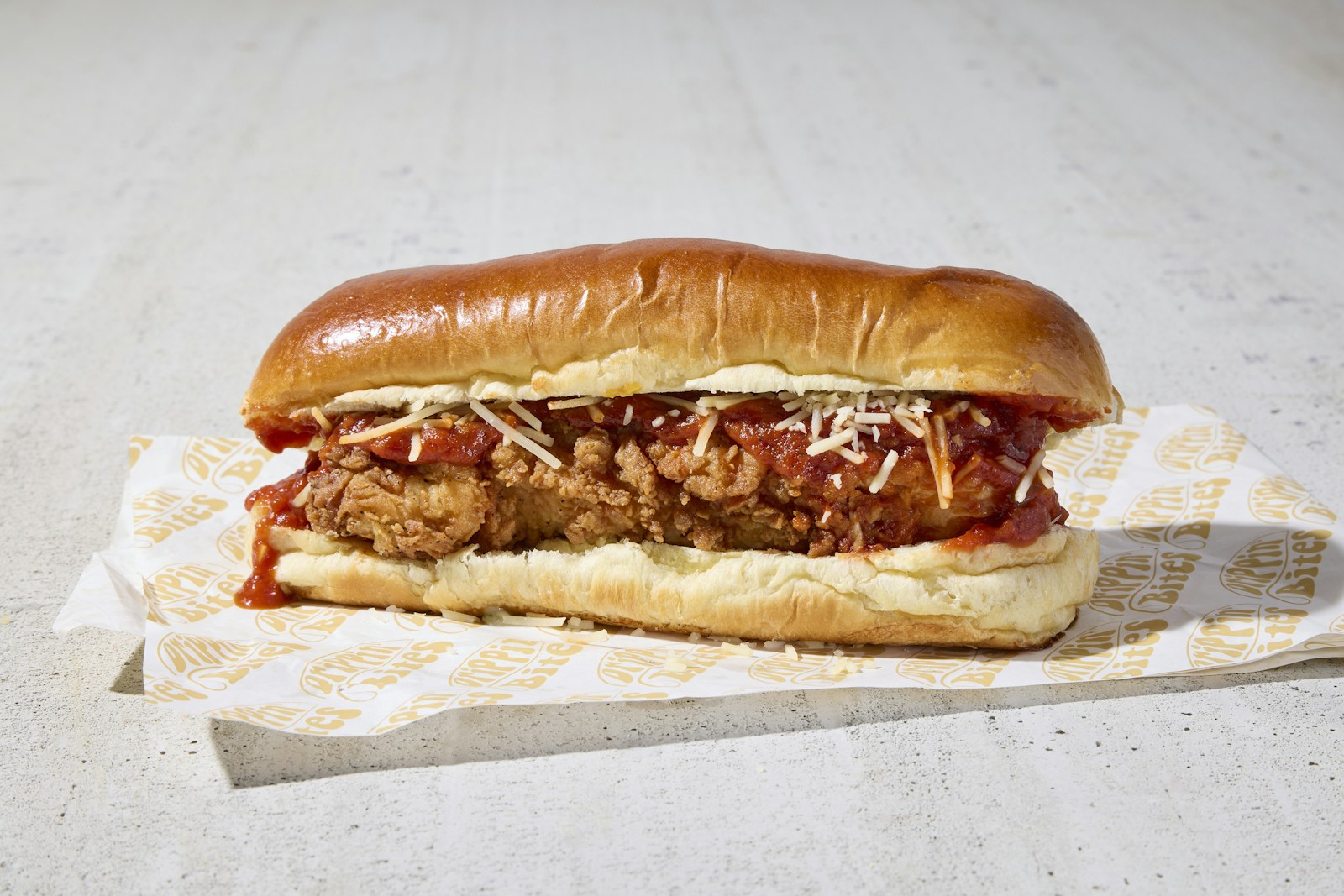
| Built for | Hot, heavy, wet fillings | Fried fillings and dressing |
| Used on | All nine Phillys, and the French Dip | The po’boys |
| Fails by | Going soggy if left | Shattering if handled roughly |
A cheesesteak on po’boy bread would fall apart under chopped meat and melted cheese; a fried shrimp po’boy on an Amoroso roll would lose the crackle that makes it what it is. There is a whole article on why the Amoroso roll became the cheesesteak standard.
Hot or cold decides the bread
The single most useful rule for reading any long-roll menu. A cold sandwich — Italian meats, cheese, oil and vinegar — can take a crustier, drier bread, because nothing is going to soften it from the inside. A hot one cannot.
That is why a hoagie and a cheesesteak, both Philadelphia, are on different ends of the same idea: the hoagie is cold and the cheesesteak is hot and wet, and the roll that works for the second is softer than strictly necessary for the first. Ours is chosen for the harder job.
- Cold filling — the bread can be crustier and drier
- Hot and wet filling — the bread has to be soft enough to yield and sturdy enough not to collapse
- Fried filling — the bread wants to add crackle, not absorb
- Dipped — the bread has to survive being deliberately wetted
Where this menu sits
It draws from two traditions at once, which is unusual. The Phillys are Philadelphia, on Philadelphia bread. The po’boys are New Orleans, on the convention that comes with them — dressed as standard, unless the filling argues otherwise.
- Philadelphia — nine Phillys, the Amoroso roll, the chopped griddle filling
- New Orleans — nine po’boys, dressed as standard, plus the seafood boil and the blackened chicken
- Italian-American — the meatball sub, the Pizza Steak
- Los Angeles — the French dip, which is on an Amoroso roll here rather than French bread
- Elsewhere entirely — the gyro wraps, and the gyoza
The French dip is the interesting case: an LA sandwich built on Philadelphia bread, because what it needs is a roll that survives being dipped. Function beat geography. Our French dip guide covers it.
Ordering two different long-roll sandwiches for a table? Get one of each bread rather than two of the same. A cheesesteak and a fried po’boy next to each other show you what each roll is for far better than any description does.
Why the names stuck
Regional food names survive because they mark belonging as much as they describe lunch. Calling it a hoagie in Philadelphia or a po’boy in New Orleans signals where you are from, which is why nobody has ever successfully standardised any of it — and why a menu that carries two of the traditions side by side has to keep both names rather than picking one.
What about the wraps?
The five wraps are the exception that clarifies the rule. A flatbread wrap carries the same idea — filling along a length, eaten in one hand — with far less bread weight and no crust at all.
That is why they eat so much lighter than a 7-inch sandwich with a similar filling. There is no structural bread doing work, so the salad and the sauce are a much larger proportion of what you are eating. The five wraps compared covers them.
The short version
Hoagie, sub, grinder, hero, po’boy, wedge: one format, six regional names, and real differences in the bread underneath. This menu runs two of those breads — a soft Amoroso roll for hot fillings and brittle New Orleans French bread for fried ones. Which roll a sandwich is on tells you most of what it will be like.
Two breads, eighteen sandwiches
Nine Phillys on Amoroso, nine po’boys on French bread.
Frequently asked questions
What is the difference between a hoagie, a sub and a po’boy?
Broadly regional names for a filled long roll. The real differences are the bread and what comes on it as standard — a po’boy is on New Orleans French bread and comes dressed.
Why are so many American sandwiches in long rolls?
A long roll carries more filling per unit of bread, eats in one hand, and divides cleanly into portions.
What breads do you use?
Two — an Amoroso roll for the Phillys and the French Dip, and New Orleans style French bread for the po’boys.
Why is the French dip on an Amoroso roll?
Because it needs a roll that survives being dipped. Function beat geography on that one.
Do the wraps count?
Same idea, much less bread. A flatbread wrap has no crust doing structural work, which is why they eat lighter.
More From the Kitchen