WINGS • 5 min read
Drums or Flats?
The two cuts, what actually separates them, and the ordering options most people never notice are on the menu.
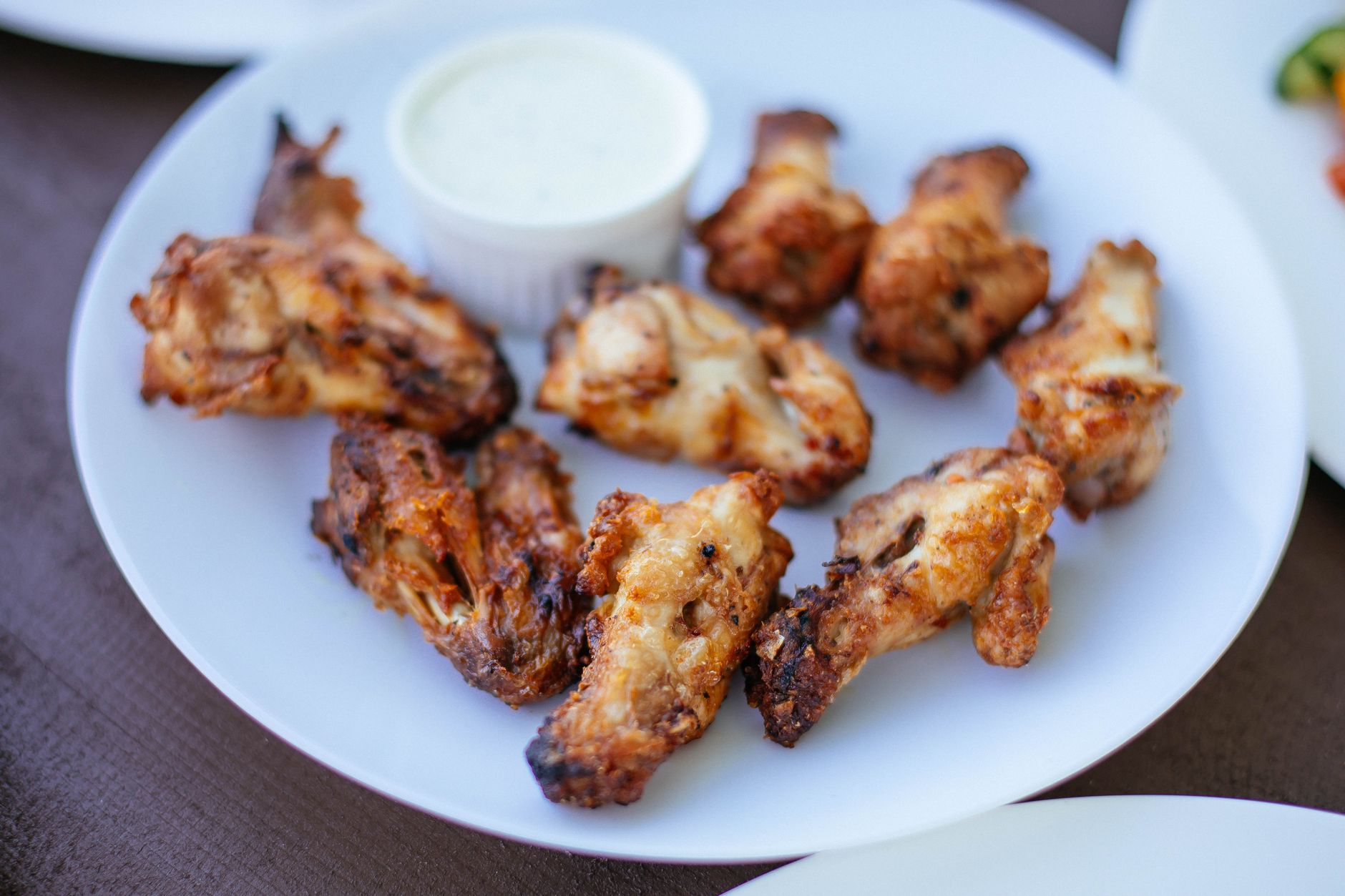
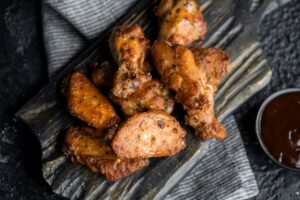
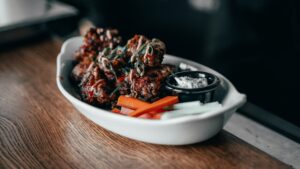
A drumette has one thick bone and more meat; a flat has two thin bones, more skin and holds more sauce. On bone-in wings you can order all drum or all flat for a small charge per ten pieces, add extra sauce or dressing, or split one order across two sauces.
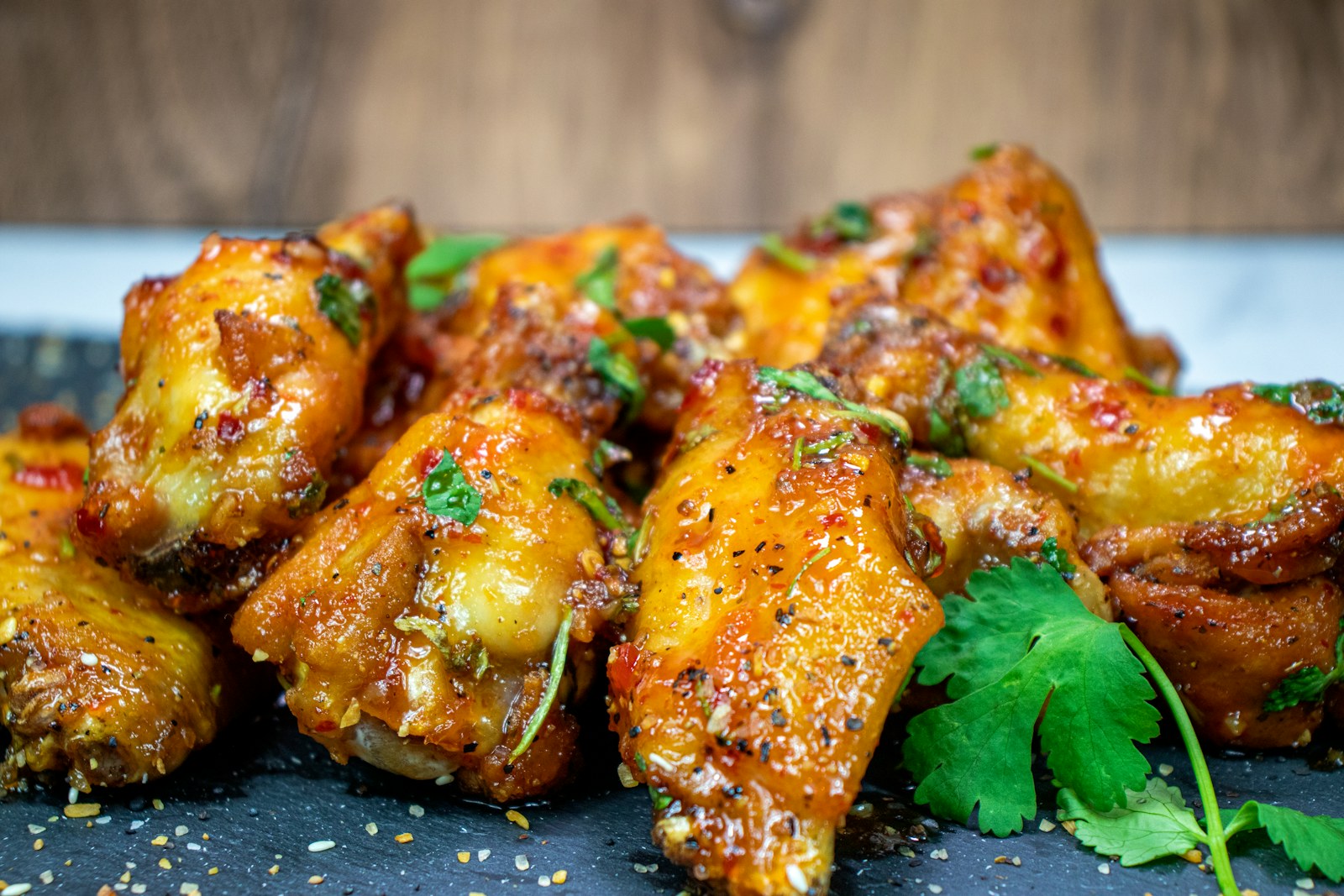
A whole chicken wing is three sections, and only two of them make it onto a plate. The drumette is the meaty piece nearest the body, shaped like a small drumstick. The flat — sometimes called the wingette — is the middle section, with two thin bones running through it. The pointed wing tip is trimmed off before cooking.
Most orders arrive as a mix of the two, which is fine for most people. If you have a preference, though, you do not have to leave it to chance.
What actually separates them
Both come off the same wing and cook the same way, so the difference is structural rather than culinary:
| Drumette | Flat | |
|---|---|---|
| Shape | One thick bone, meat pushed to one end | Two thin bones, meat between them |
| Meat per piece | More | Less |
| Skin per piece | Less | More |
| Sauce it holds | Less — smoother surface | More — sauce collects between the bones |
| How you eat it | Hold the end, eat it like a lollipop | Pull the bones out, or eat around them |
| Mess | Lower | Higher |
| Best for | Eating standing up, feeding kids | Sitting down, maximum sauce and crisp skin |
The short version: drumettes give you more meat per piece and are easier to handle. Flats give you more crisp skin and more sauce per piece, and they take more work. Neither is objectively better, which is why the argument never settles.
Yes, you can ask for all of one
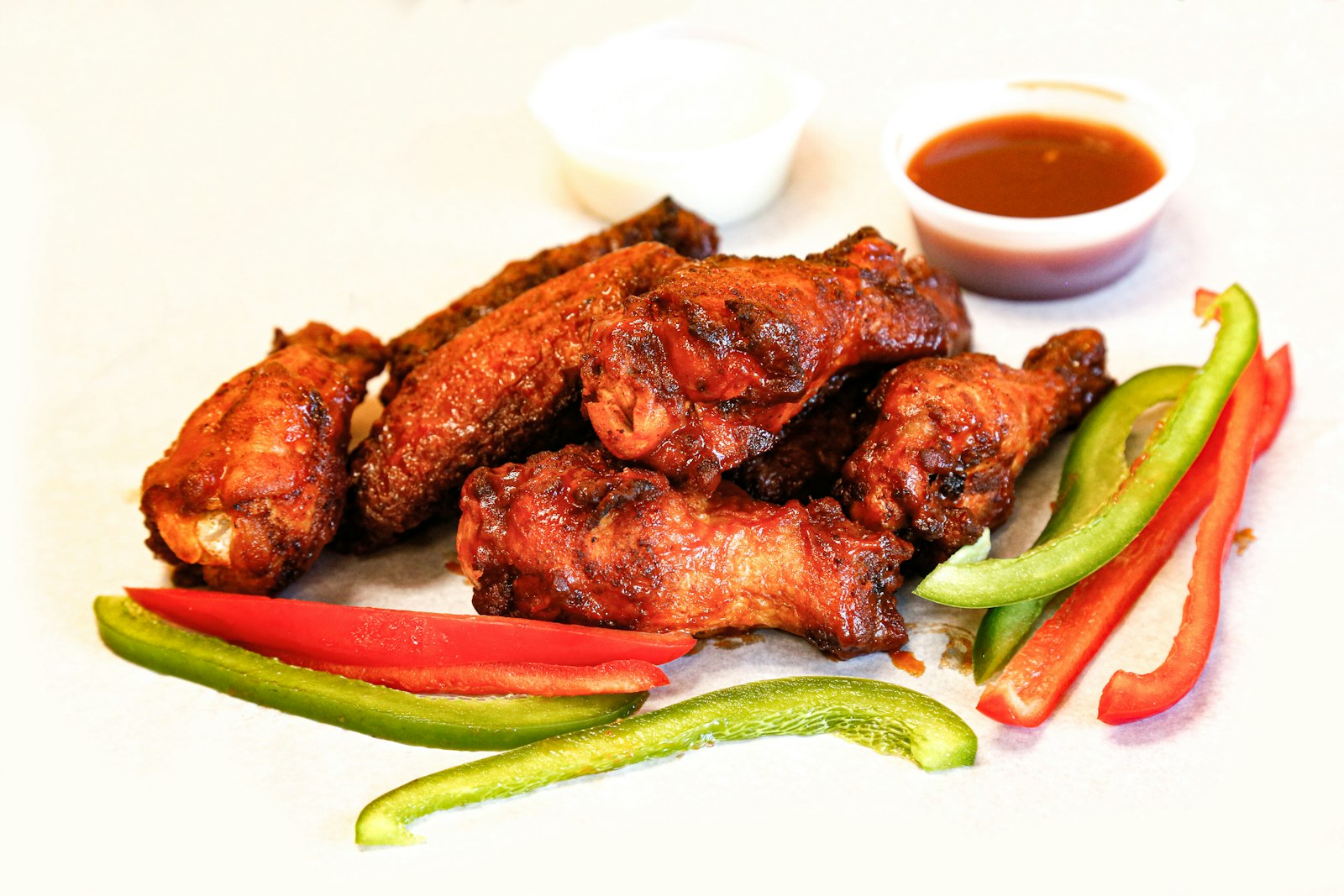
This is the part most people do not realise is on the menu. Bone-in wings can be ordered all drum or all flat for a small charge per ten pieces. It is not available on boneless, for the obvious reason that boneless wings are not wings and have no cut to choose.
Worth doing if you know what you like. Worth skipping if you are ordering for a group, because a mixed order lets people take the piece they prefer, and there is always someone at the table on the other side of the argument.
The other options people miss
Three more that change the order more than the cut does:
- Extra wet — more sauce, charged per ten pieces. Order it if you like sauce on your fingers; skip it if you want the skin to stay crisp
- Extra dressing — an additional cup, per cup. Cheaper than running out halfway through 20 pieces
- Split — divide one order across more than one sauce, per split. The single best option on this list for a group
Splitting is the one worth knowing. A 20-piece split across two sauces solves the mixed-table problem completely, and it costs less than ordering two separate tens.
Ordering wings for delivery or a long drive home? Skip extra wet. Sauce keeps working on the skin inside a closed container, and wings that were crisp when they were bagged will not be crisp when you open them.
Sauce on the wing, or on the side
This decision does more to the wings than the cut does, and it barely gets discussed. Sauce tossed onto hot wings starts softening the skin immediately. A cup on the side keeps every piece crisp and lets each person use as much or as little as they want.
The trade-off is coverage. Dipping puts sauce on one face of the wing; tossing gets it into the folds and between the bones, which is precisely what makes a sauced flat better than a sauced drumette.
- Eating in, straight away — sauced is better, every time
- Taking it home, or a group with different tastes — sauce on the side
- A long count in one sauce — add a cup anyway, for the last few pieces
- Kids at the table — on the side, so the heat is theirs to choose
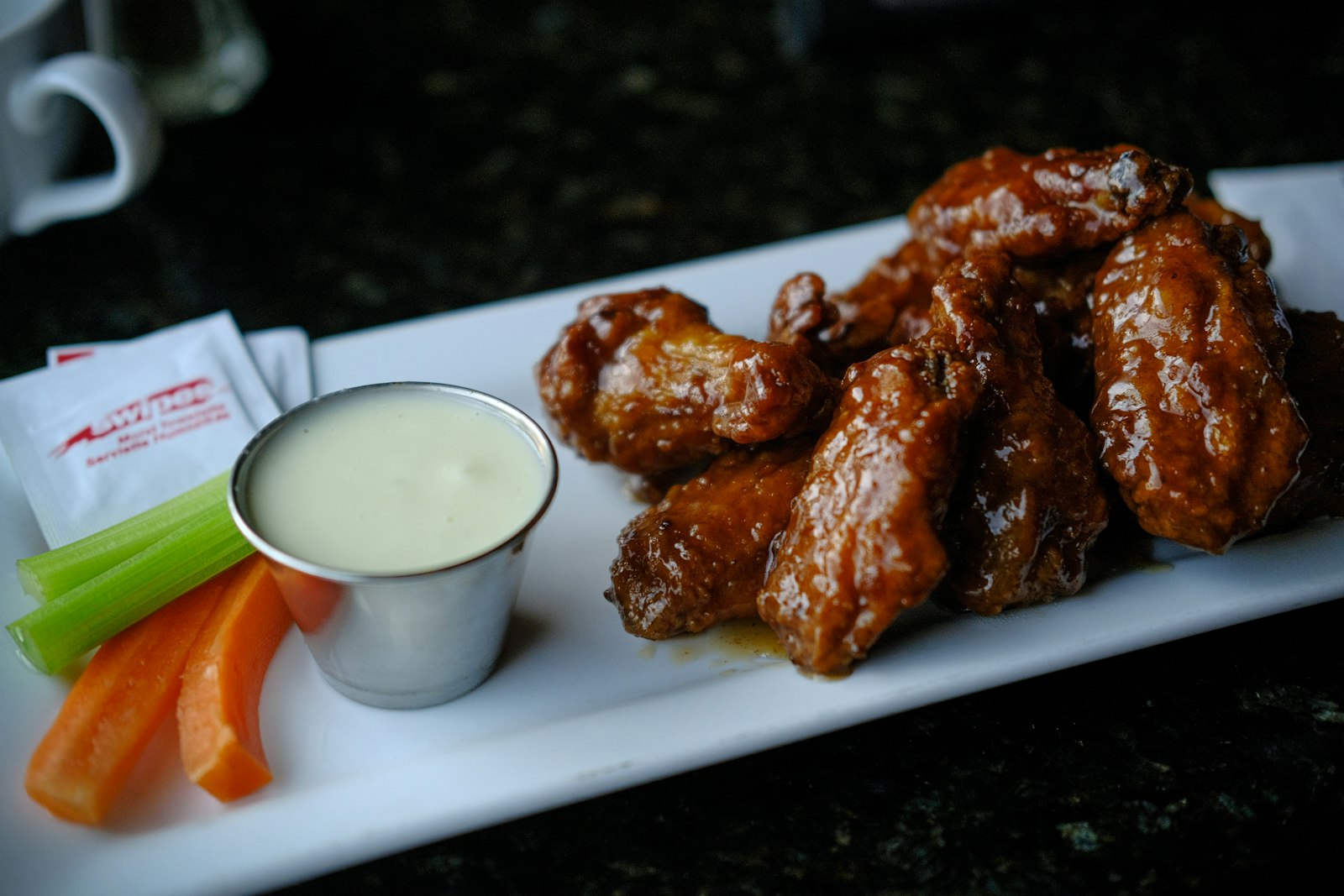
Sauce and dressing cups are on the menu as sides in their own right — ranch, blue cheese, honey BBQ, honey mustard, hot sauce, mild sauce, garlic sauce and several others. Adding one or two to an order costs little and does more for a shared table than an extra five pieces would.
How many, and in what form
Wings here run from 5 pieces up to 200, bone-in or boneless, so the piece count is rarely the constraint. Where people go wrong is ordering one large count in one sauce for a group with different tastes.
The very large counts exist for a reason, and it is not bravado. At 75, 100 or 200 pieces you are feeding a party or a team, and at that scale the cut stops mattering and the split becomes the whole game — a 100-piece order in a single sauce will leave half the room disappointed no matter which sauce you pick.
If you are working out quantities rather than cuts, our guide to how many wings per person has the group-size table. If you are still deciding between bone-in and boneless at all, that comparison is here — and note that the all-drum and all-flat option only exists on the bone-in side.
A note on cooking them at home
If you are buying wings raw rather than ordering them, the cut matters at the prep stage too. Flats are thinner and cook through faster, so a tray mixing both will finish unevenly unless you pull the flats early. Separating them before cooking is the fix, and it is also the reason plenty of home cooks end up buying one cut only.
Raw chicken also needs the usual care about surfaces and hand-washing — the FDA’s guidance on safe food handling covers the basics.
The short version
Drumettes are meatier and cleaner to eat; flats hold more sauce and more crisp skin. You can order all of either on bone-in wings, add extra sauce or dressing, or split a single order across sauces — and for a group, splitting beats choosing. It is all on the wings menu.
Wings, cut the way you want them
Bone-in or boneless, 5 pieces to 200, all drum or all flat on the bone-in side.
Frequently asked questions
What is the difference between drums and flats?
A drumette has one thick bone and more meat; a flat has two thin bones, less meat and more skin, so it carries more sauce.
Can you order all drums or all flats?
Yes, on bone-in wings, for a small charge per ten pieces. It is not offered on boneless wings.
Which is better, drums or flats?
Drumettes are easier to eat and give more meat per piece. Flats give more crisp skin and hold more sauce. It is preference, not quality.
What does ‘extra wet’ mean?
More sauce on the wings, charged per ten pieces. It makes them saucier and less crisp, so it suits eating in more than taking away.
Can you split one wing order across two sauces?
Yes — there is a split option, charged per split. For a group it works better than ordering two separate portions.
More From the Kitchen