MENU GUIDES • 5 min read
What Is a Gyro?
Thin-sliced meat, raw salad and a cool sauce in soft flatbread — and how it differs from the sandwiches sitting next to it on the menu.
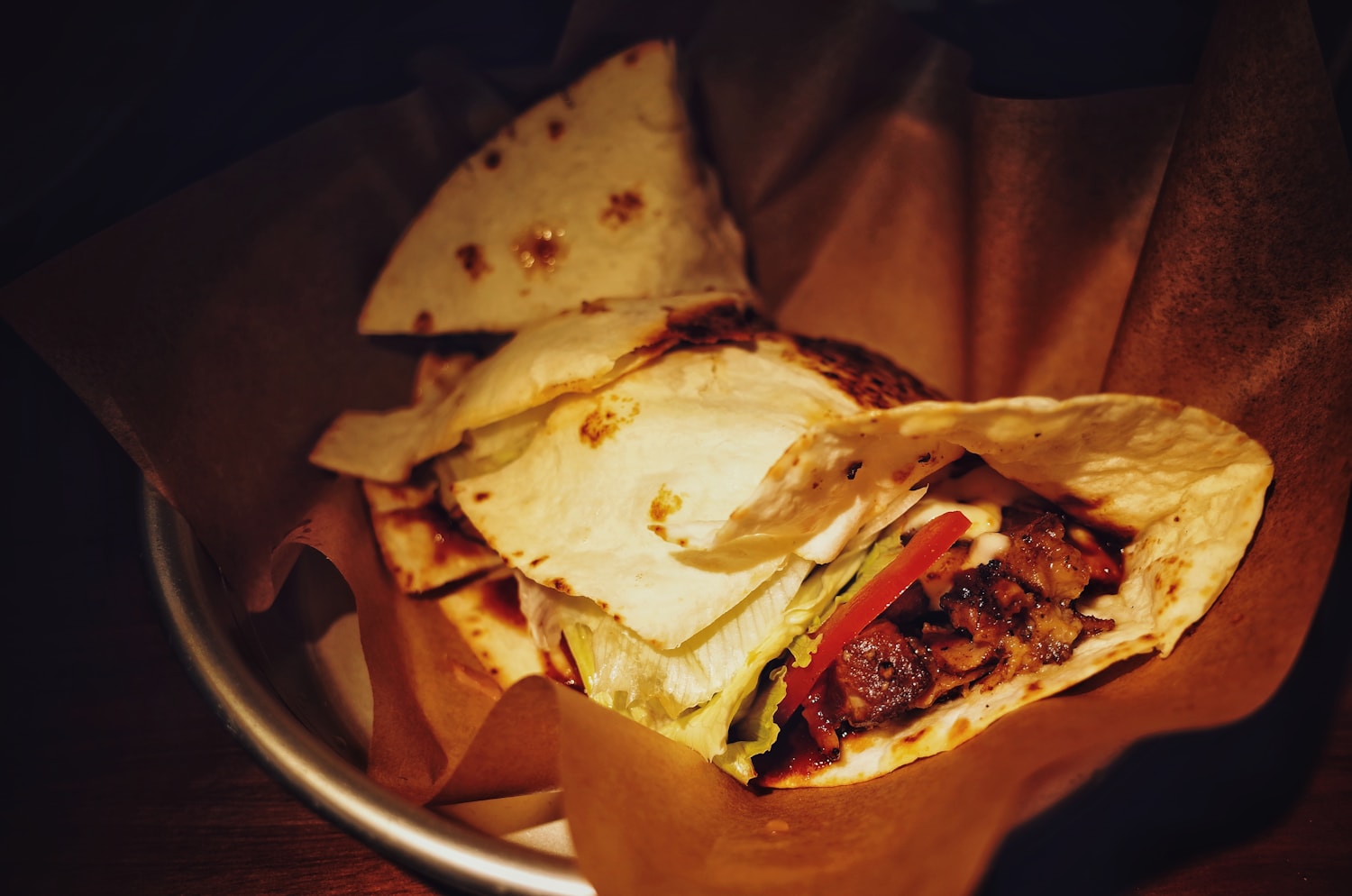
A gyro is meat cooked on a vertical rotisserie, sliced thin and wrapped in flatbread with raw salad and a cool cucumber sauce. It eats lighter than a cheesesteak or a po’boy of the same size, because so much of it is raw salad and cold sauce rather than cheese and griddled beef.
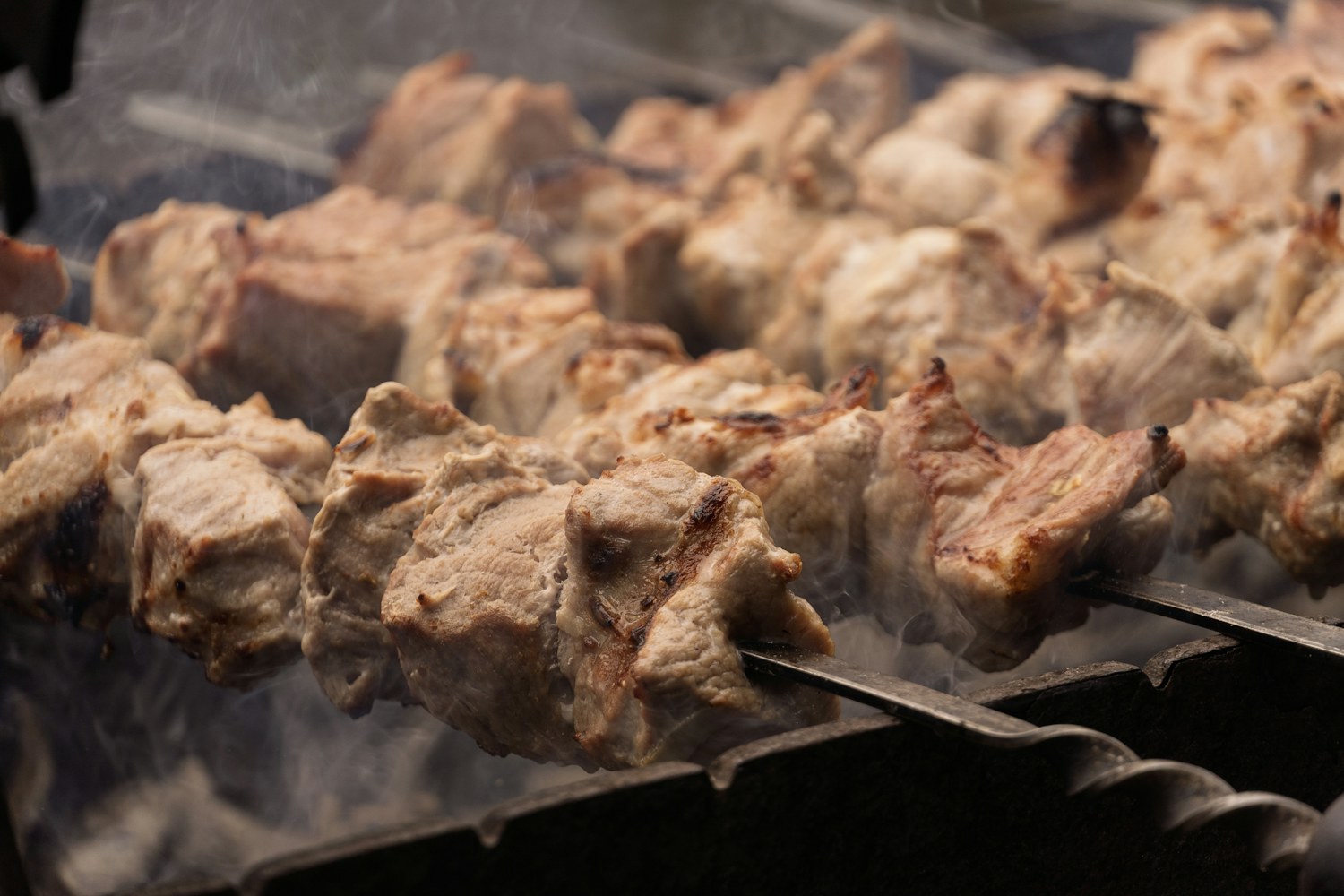
A gyro is meat cooked on a vertical rotisserie, sliced thin and wrapped in flatbread with raw salad and a cool, yoghurt-based cucumber sauce. The name is Greek and refers to the turning of the spit. What arrives at the table varies a good deal from kitchen to kitchen, but the shape of it never changes: thin-sliced meat, something fresh and raw for contrast, and a cold sauce cutting through a warm filling.
It is one of the few things on a menu like ours that eats lighter than it looks, and that is worth knowing before you order it next to a cheesesteak.
What goes in one
Three components do the work, and they stay the same whichever meat you pick:
- Thin-sliced meat, carved so the outside edges stay browned
- Raw vegetables — usually onion, lettuce and tomato
- A cool, tangy cucumber sauce that cuts the richness of the meat
- Soft flatbread that folds around all of it without cracking
The sauce is the part people underestimate. In Greece it is tzatziki — yoghurt, cucumber, garlic and seasoning — and its job is temperature and acidity rather than flavour alone. Take it away and a gyro eats like any other meat wrap. Ours are built with raw onions, lettuce, tomato and a cucumber sauce, and come as a gyro wrap, chicken wrap, beef wrap, shrimp wrap, or a veggie wrap with no meat at all.
The bread matters nearly as much. It has to be soft enough to fold without splitting and sturdy enough to hold sauce and salad without going through at the bottom. That is why gyros are wrapped rather than served open — the wrap is structural, not presentation.
Where it comes from
The vertical rotisserie is an Ottoman-era technique that spread across the eastern Mediterranean, and the Greek version took the name gyros, from the word for turning. It reached the United States with Greek immigration in the twentieth century and settled first in cities with large Greek communities before spreading to menus everywhere. Britannica’s entry on the gyro describes the classic build: roasted meat in a pita, usually with tomato, onion and tzatziki.
On pronunciation: the Greek is closer to YEE-roh than the JY-roh most American menus have settled into. Nobody will correct you either way.
Gyro, doner or shawarma?
All three are vertical-rotisserie meat in bread, and the differences between them are regional rather than fundamental. If you like one, you will almost certainly like the others.
| Gyro | Doner | Shawarma | |
|---|---|---|---|
| Origin | Greece | Turkey | Levant / Middle East |
| Bread | Soft pita or flatbread | Flatbread or bread wedge | Thin flatbread |
| Typical sauce | Yoghurt and cucumber | Garlic or chilli sauce | Tahini or garlic |
| Usual salad | Onion, tomato, lettuce | Cabbage, onion, tomato | Pickles, tomato, parsley |
| Eats like | Fresh and tangy | Sharper, often spicier | Nuttier, from the sesame sauce |
The sauce is usually the deciding factor rather than the meat. Doner takes its name from the Turkish for rotating meat, which tells you how closely the three are related — they are the same idea, sauced three different ways.
How it differs from a cheesesteak or a po’boy
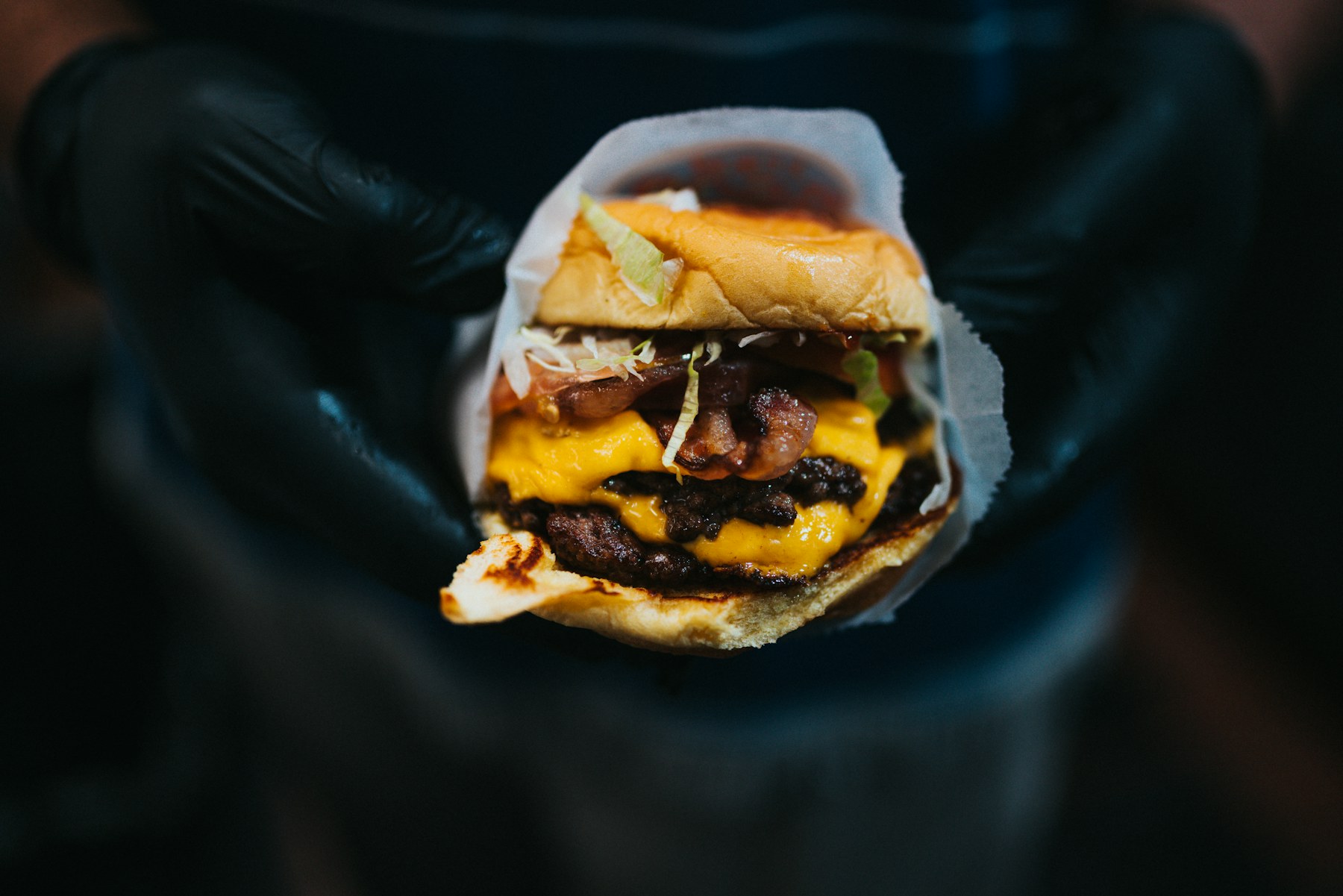
This is the comparison that actually matters when all three are on the same menu. A cheesesteak is griddled beef and melted cheese in a long roll — hot the whole way through, rich, and uniform from end to end. A po’boy is a filled sandwich on crisp New Orleans French bread, where the bread does as much work as the filling.
A gyro is the only one of the three built around raw salad and a cold sauce. That single difference is why it eats lighter than a cheesesteak of similar weight, and why it is the one most people can finish without needing to sit still afterwards. It is also the least forgiving if it sits — a cheesesteak survives twenty minutes in foil, a gyro does not.
If you are weighing them up, our cheesesteak explainer and the po’boy guide cover the other two in the same detail.
Taking a gyro away rather than eating in? Ask for the sauce on the side. Yoghurt sauce against warm meat in a closed wrap softens the flatbread within about ten minutes, and there is no rescuing it after that.
Which wrap should you order?
The five on our menu split fairly neatly by how much you want the meat to lead and how much you want the sauce to:
- Gyro wrap — the traditional version, and the one to start with
- Chicken wrap — lighter, and the safest choice for a first order
- Beef wrap — richer, and stands up to a heavier hand with the sauce
- Shrimp wrap — the lightest of the five by some distance
- Veggie wrap — the same bread, salad and sauce, no meat
Ordering for a group with one person who does not eat meat? The veggie wrap is built the same way as the rest, so it is not the afterthought it often is elsewhere. The full list is on the gyro menu.
What separates a good one from a poor one
Four things, in roughly this order of importance:
- The meat has browned edges rather than being uniformly grey
- The bread is warm and pliable, not stiff or dried at the edges
- There is enough sauce to taste in every bite, not just the first
- It was wrapped a minute ago, not ten minutes ago
Almost every disappointing gyro fails on the last point. It is a sandwich with a short window, which is why it is worth eating in if you have the choice.
What to order alongside
A gyro is less filling than a cheesesteak of the same size, so the side matters more here than it usually does. Fries are the obvious choice and the one most people make. Onion rings work if you want something with more bite against the cool sauce.
What to avoid is anything creamy or heavily dressed — the cucumber sauce already covers that ground, and doubling up flattens both. If you want something green on the table, a plain salad works better than a loaded one for the same reason.
Five wraps on the menu
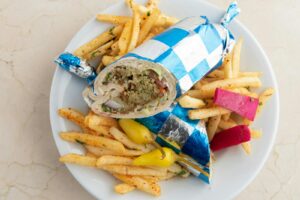
Gyro, chicken, beef, shrimp or veggie — every one built with raw onions, lettuce, tomato and cucumber sauce.

Frequently asked questions
What meat is in a gyro?
Traditionally seasoned meat cooked on a vertical rotisserie and sliced thin. Ours also come as chicken, beef, shrimp, or a veggie version with no meat.
What sauce goes on a gyro?
A cool cucumber sauce. Its job is to balance the warm meat with temperature and acidity rather than to add heat.
Is a gyro the same as a doner kebab?
They are close relatives — the same vertical-rotisserie method, with different regional sauces and salads.
Can you get a gyro without meat?
Yes. The veggie wrap uses the same bread, salad and sauce as the rest.
Is a gyro lighter than a cheesesteak?
Generally yes, at a similar size, because so much of a gyro is raw salad and cold sauce rather than cheese and griddled beef.
More From the Kitchen