SIDES & STARTERS • 5 min read
What Are Gyoza?
Eight dumplings between the corn nuggets and the fried mushrooms — and the only thing on the starter menu with that texture.
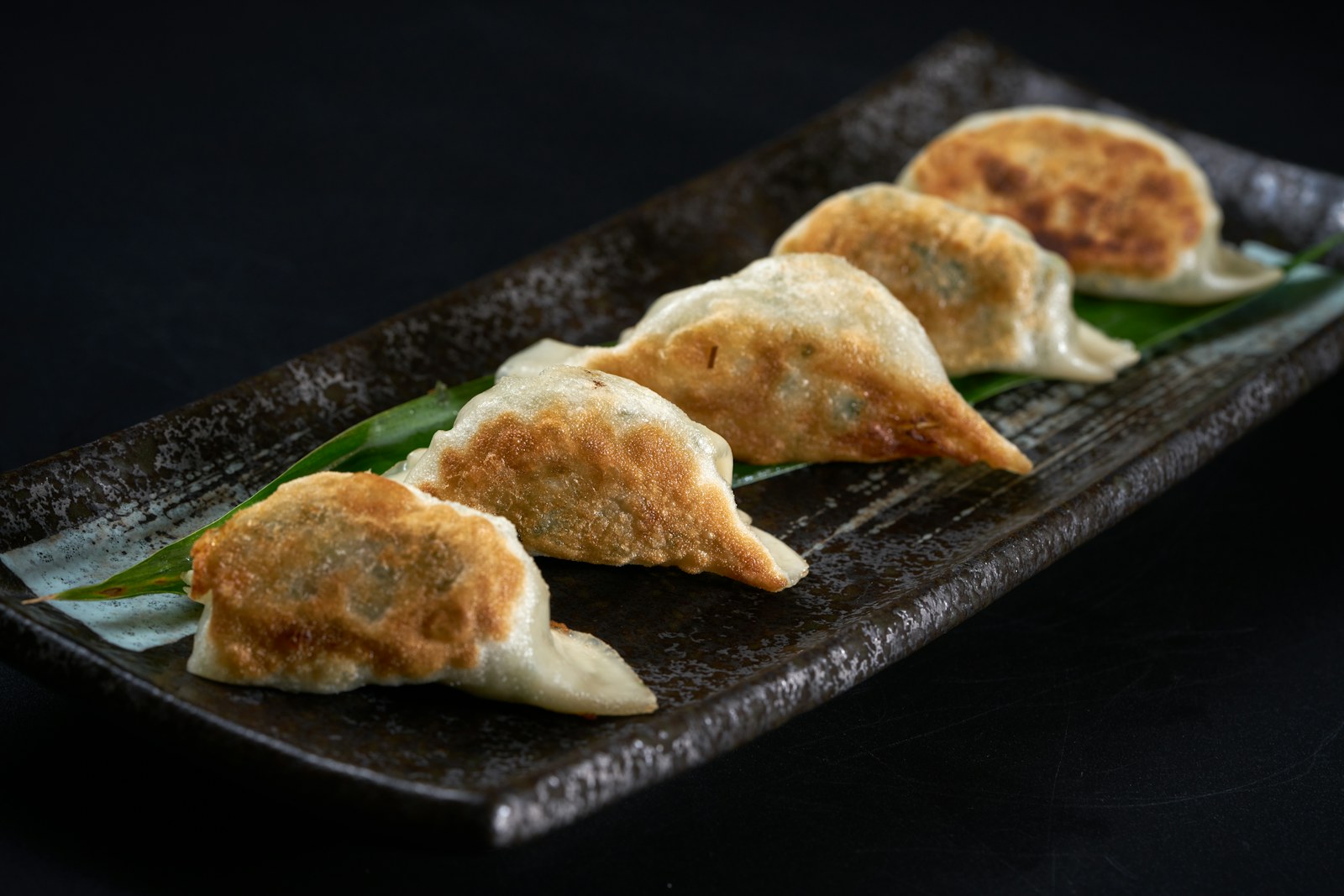
Gyoza are Japanese-style filled dumplings: a thin wheat wrapper pleated around a filling, fried on one face and then steamed, so one side is crisp and the rest stays soft. Eight to a portion, and the only item on the appetizer menu that is not battered.
There are gyoza on this menu, eight to a portion, sitting between the corn nuggets and the fried mushrooms. On a menu of cheesesteaks, wings and po’boys that is genuinely unexpected, and it is one of the better things on the appetizer list.
Here is what they are and why they work where they are.
What a gyoza is
A filled dumpling: a thin wheat wrapper folded around a filling, pleated along one edge to seal it. The Japanese style is cooked by a method usually called pot-sticking — fried on one side until it browns, then steamed in the same pan until the wrapper is cooked through.
That two-stage cooking is the whole character of the thing. One face is crisp and browned; the rest of the wrapper stays soft and slightly translucent. You get two textures in one small object, which is not something anything else on this menu does.
Where they come from
Gyoza are the Japanese version of a much older Chinese dumpling, jiaozi, and they arrived in Japan in the mid-twentieth century before being adapted — thinner wrappers, more garlic, and a strong preference for the pan-fried treatment over the boiled one.
Dumplings in the broad sense are close to universal — almost every cuisine has arrived at the idea of wrapping something in dough and cooking it — which is part of why a dumpling does not feel out of place next to a cheesesteak. Everybody already knows what it is.
Why they belong on this menu
Because the appetizer list is otherwise almost entirely battered and fried, and gyoza are the one thing on it with a genuinely different texture.
| Gyoza | Battered items | Fries and rings | |
|---|---|---|---|
| Coating | A dough wrapper | Batter or breadcrumb | Batter or none |
| Texture | Crisp on one side, soft elsewhere | Crisp all over | Crisp then soft |
| Richness | Low | High | Medium |
| Eaten with | Fingers or a fork | Fingers | Fingers |
| Good after | Anything — they reset the palate | Not much else fried | Anything |
That last row is the practical argument. A table ordering three fried starters is ordering the same texture three times; swapping one for gyoza changes the spread completely. Our guide to the whole appetizer menu goes through building a spread by texture rather than by flavour.
What is actually in them
The classic filling is minced pork with cabbage, garlic, ginger and spring onion, finely chopped and packed tight so it holds together when the wrapper is folded. Vegetable versions swap the pork for mushroom and more cabbage.
The proportions are what separate a gyoza from a larger dumpling: the wrapper is thin and the filling is dense, so you get considerably more filling than dough in each bite. A thicker-skinned dumpling eats like bread with something inside it; a gyoza does not.
Because they are small and the filling is finely chopped, they also cook fast — which is why the two-stage method works at all. A larger dumpling would burn on the fried face before the middle was done.
How to eat them
Crisp side up, in one or two bites, and be careful with the first one. A dumpling holds steam inside the wrapper, and the inside is considerably hotter than the outside feels — the most common way to have a bad time with gyoza is to bite one straight out of the pan.
- Give them thirty seconds before the first one
- Two bites rather than one, so the steam escapes
- Crisp side up, so it stays crisp on the plate
- Eat them early in the order — the browned face softens as it sits
What to dip them in
Gyoza traditionally go with a soy-and-vinegar dip, which is not on our sides menu. What is on it and works: garlic sauce, which brings depth without heat, and the hot sauce if you want sharpness.
Avoid ranch and blue cheese here, which is the one place those two are the wrong answer — both are creamy and mild, and a gyoza is already soft and mild. You want acidity or salt against it rather than more cream. There is more on which cup does what in ranch or blue cheese.
Ordering gyoza alongside wings? Ask for them to come out first. They are the one starter on the menu that is meaningfully worse five minutes later, because the crisp face steams itself soft against the plate.
Gyoza against the other rolled things
There are two other wrapped items on the same menu, and it is worth knowing they are not variations on each other. The Vegetable Roll and the Philly Steak Roll both come two to a portion and are deep-fried the whole way round — crisp everywhere, with no soft face at all.
So the three cover genuinely different ground: gyoza are half crisp and half soft, the rolls are crisp throughout, and the Philly Steak Roll in particular is a smaller version of something else on the menu rather than its own idea. Ordering gyoza and a roll gives you two textures; ordering both rolls gives you one.
Eight is the right number
Worth saying because portion sizes on this menu vary a lot. Eight gyoza is a starter for two or a light snack for one — substantial enough to register, small enough not to fill anybody up before the wings arrive.
For a table of four ordering several starters, one portion of gyoza plus one potato item plus something sharp covers more ground than three fried plates would.
The short version
Gyoza are pan-fried filled dumplings, crisp on one face and soft everywhere else, eight to a portion. They are the only thing on the appetizer menu with that texture, which makes them the most useful single order for breaking up a fried spread. Eat them first and dip them in something sharp. On the appetizer menu.
Eight to a portion
On the appetizer menu, between the corn nuggets and the fried mushrooms.
Frequently asked questions
What are gyoza?
Japanese-style filled dumplings — a thin wheat wrapper pleated around a filling, fried on one side and then steamed so one face is crisp.
How many come in a portion?
Eight. That is a starter for two, or a light snack for one.
What do you dip gyoza in?
Traditionally soy and vinegar. From our sides menu, garlic sauce or hot sauce work; ranch and blue cheese are too creamy against them.
Are gyoza fried?
Partly. They are pan-fried on one face and then steamed, so they are much lighter than the battered items next to them.
When should I eat them?
Early. The crisp face softens against the plate within a few minutes.